Crypto futures formation scanner
Local scanner of Binance USDT futures that finds A–B–C price formations, saves a multi-timeframe snapshot at the signal and scores each outcome on a 5-point scale.
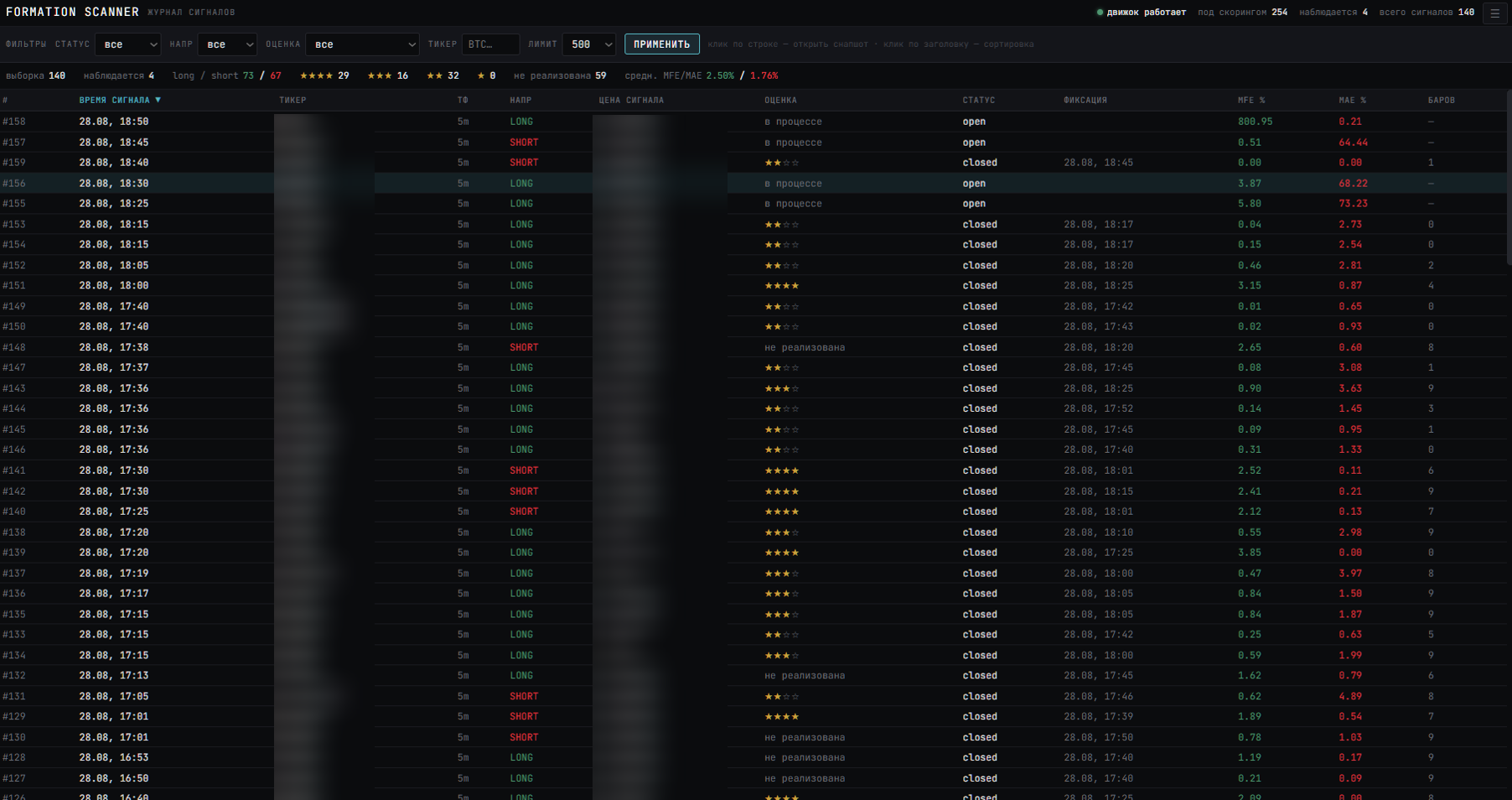
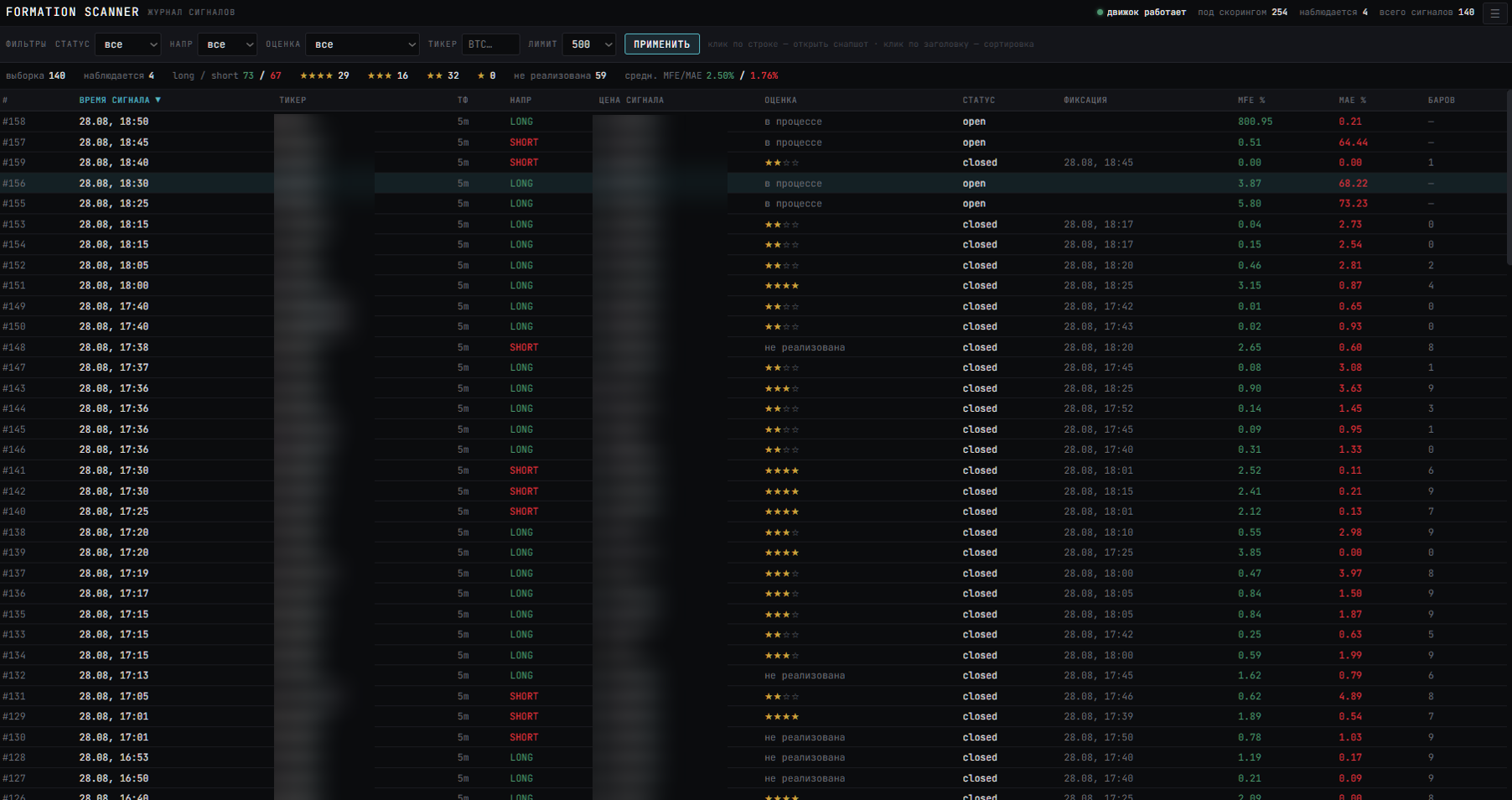
Signal journal with 5-point scores 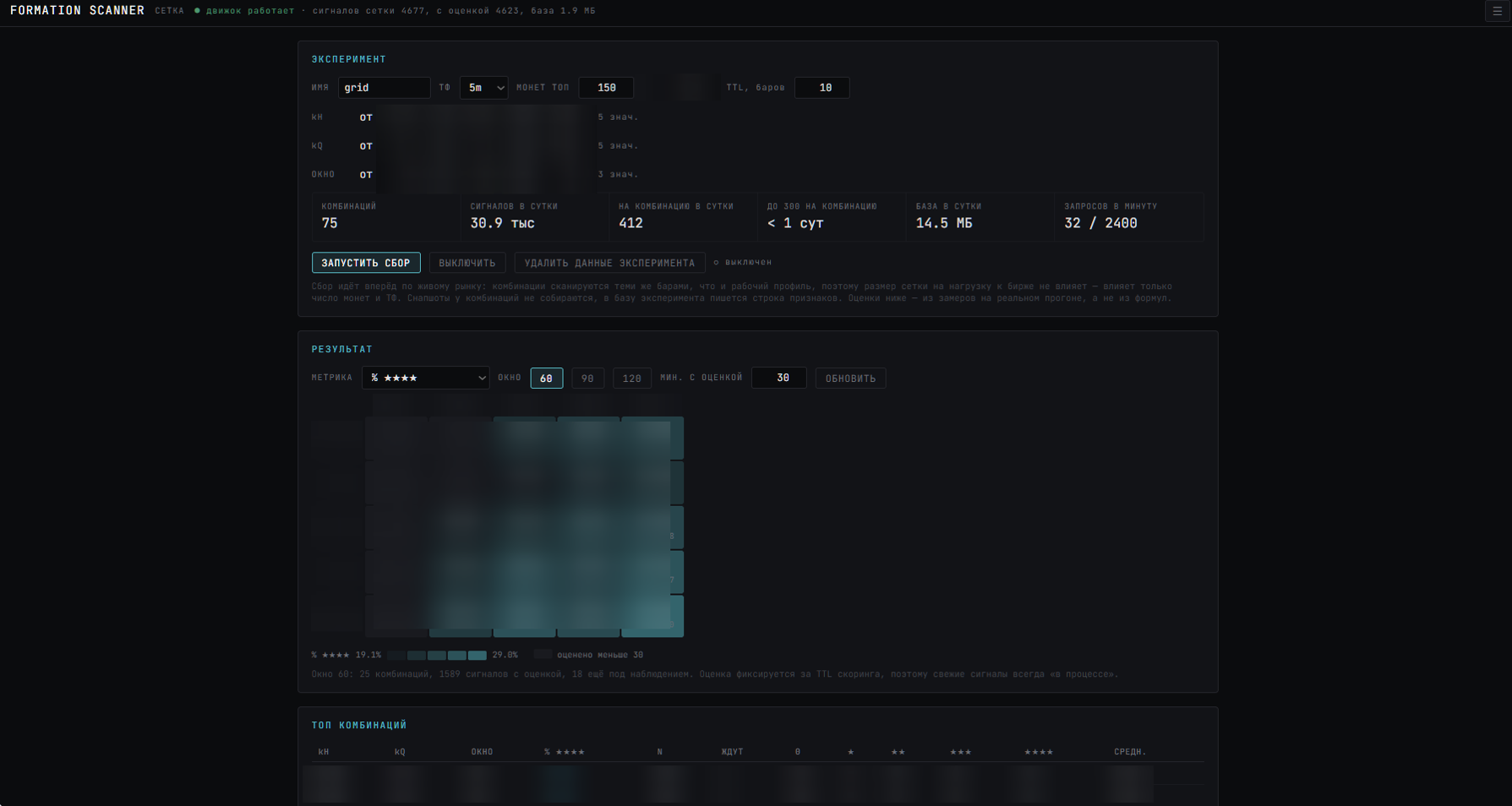
Settings grid: which combination works 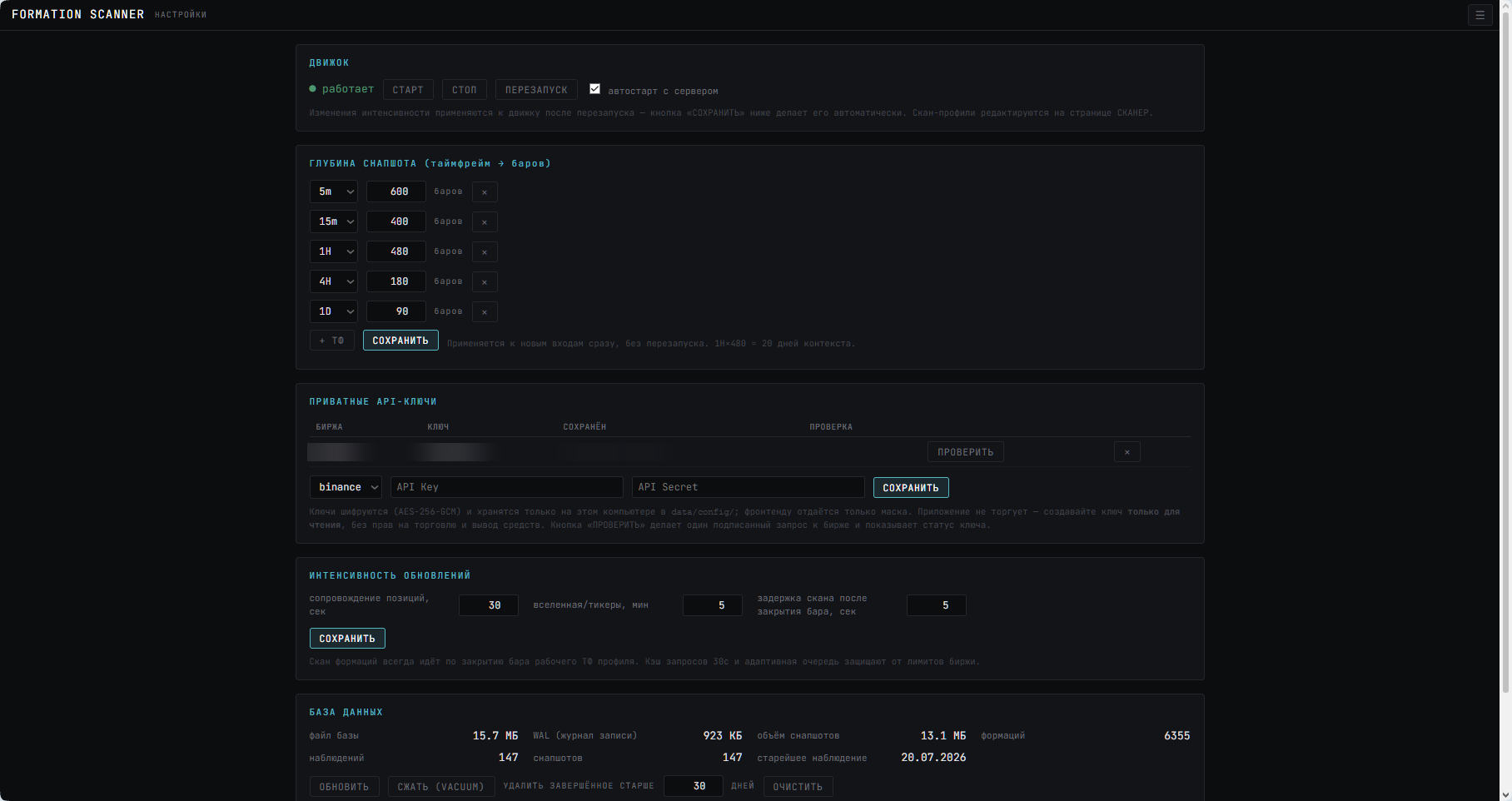
Engine, snapshot and key settings
Idea
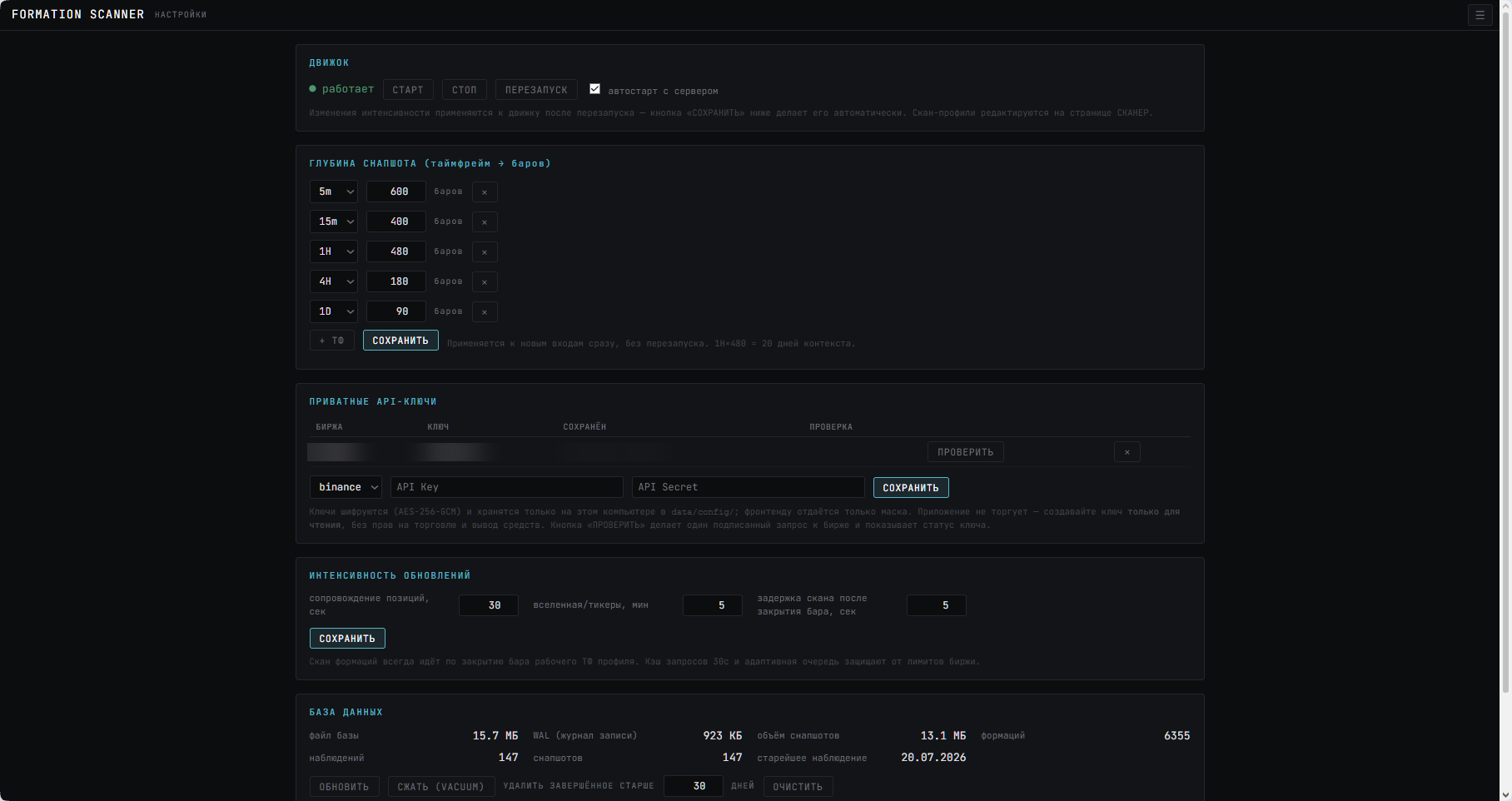
The scanner watches Binance USDT futures continuously, detects price formations and identifies a signal according to the user's settings. At the signal it saves a snapshot: bars of timeframes from 5 minutes to a day, the formation points and a vector of characteristics. When the outcome is settled, the formation is scored in stars, up to four, by the order in which the price crossed its levels, and a second snapshot is saved.
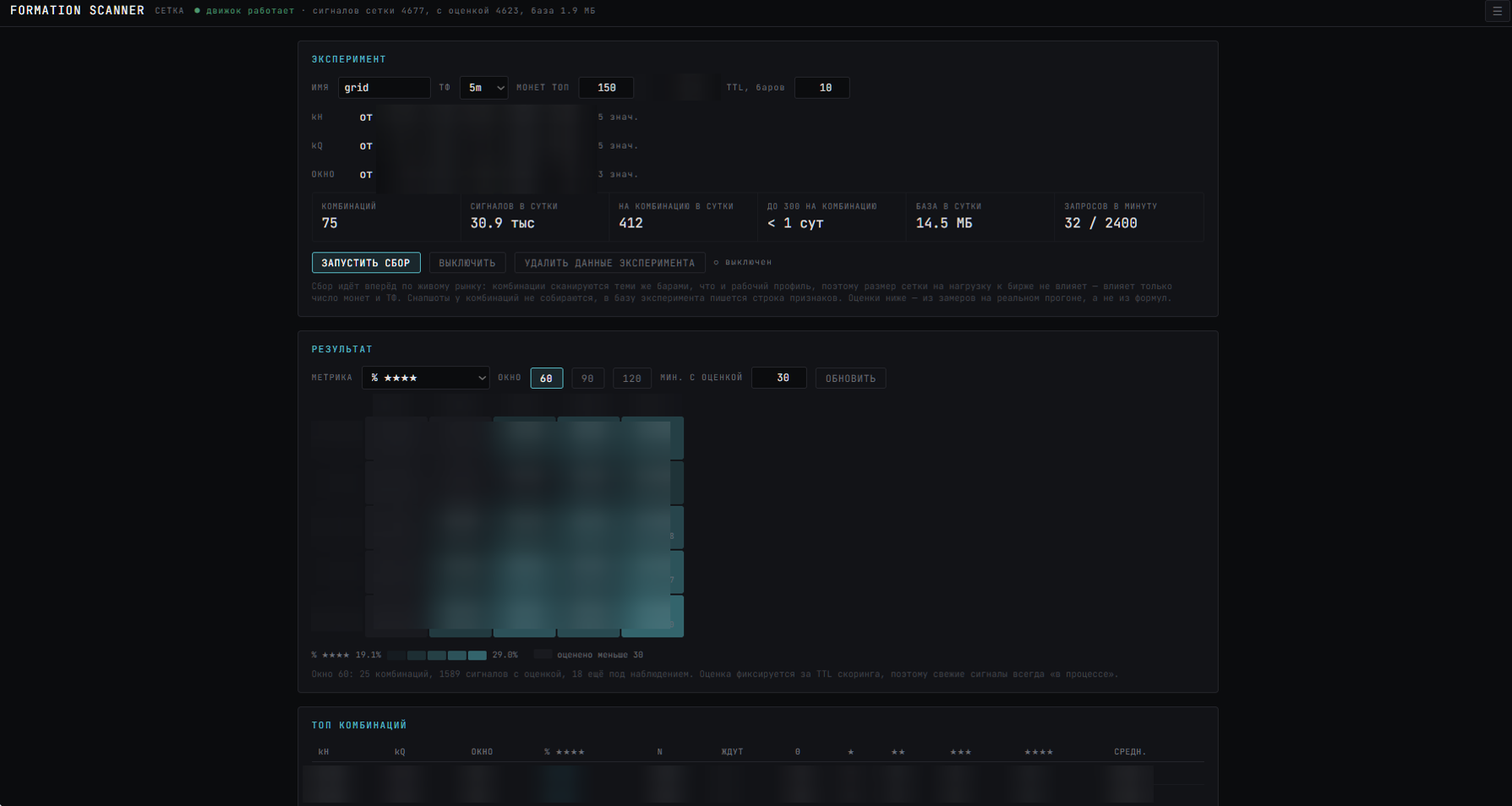
The goal is a labelled dataset of formation, context and outcome, to see where the formation works and to calibrate its settings. A journal lists signals with filters and statistics by stars, a canvas viewer replays the chart, and a settings grid collects many combinations of points and window in parallel and draws a heat map with the sample size in every cell. Collection runs forward on the live market only, so results describe the current market.
Making the grid cheap was the main engineering task. Bars are downloaded once per symbol and the detector runs over them in memory, so 125 combinations cost the same number of requests as one profile, about 6% of the Binance limit. Grid signals store a row of characteristics instead of a snapshot, which brings grid storage from about 4.5 GB to about 36 MB a day; the scan download went from 39.8 s to 2.1 s at four times the depth. Stack: Node.js and TypeScript with SQLite.
Business impact
Built to order, so there is no commercial effect to report. The result is the working tool: continuous scanning, a signal journal with scored outcomes, and a settings grid for choosing parameters from live data.